Minimal Vocabulary for Artificial Human Language
what is the minimal vocabulary of word roots we need in artificial human language?
Creating an artificial human language (conlang) with a minimal vocabulary of word roots requires careful consideration of semantic coverage, efficiency, and expressiveness. The goal is to cover the broadest range of meanings with the fewest roots, relying on compounding, derivation, and context to expand expressivity.
Minimal Root Vocabulary Estimate: ~1,000–2,000 Roots
Studies in natural language semantics and constructed languages (like Toki Pona, Esperanto, or Lojban) suggest that a functional but minimal vocabulary for a human-like language requires roughly 1,000–2,000 root words. Here’s why:
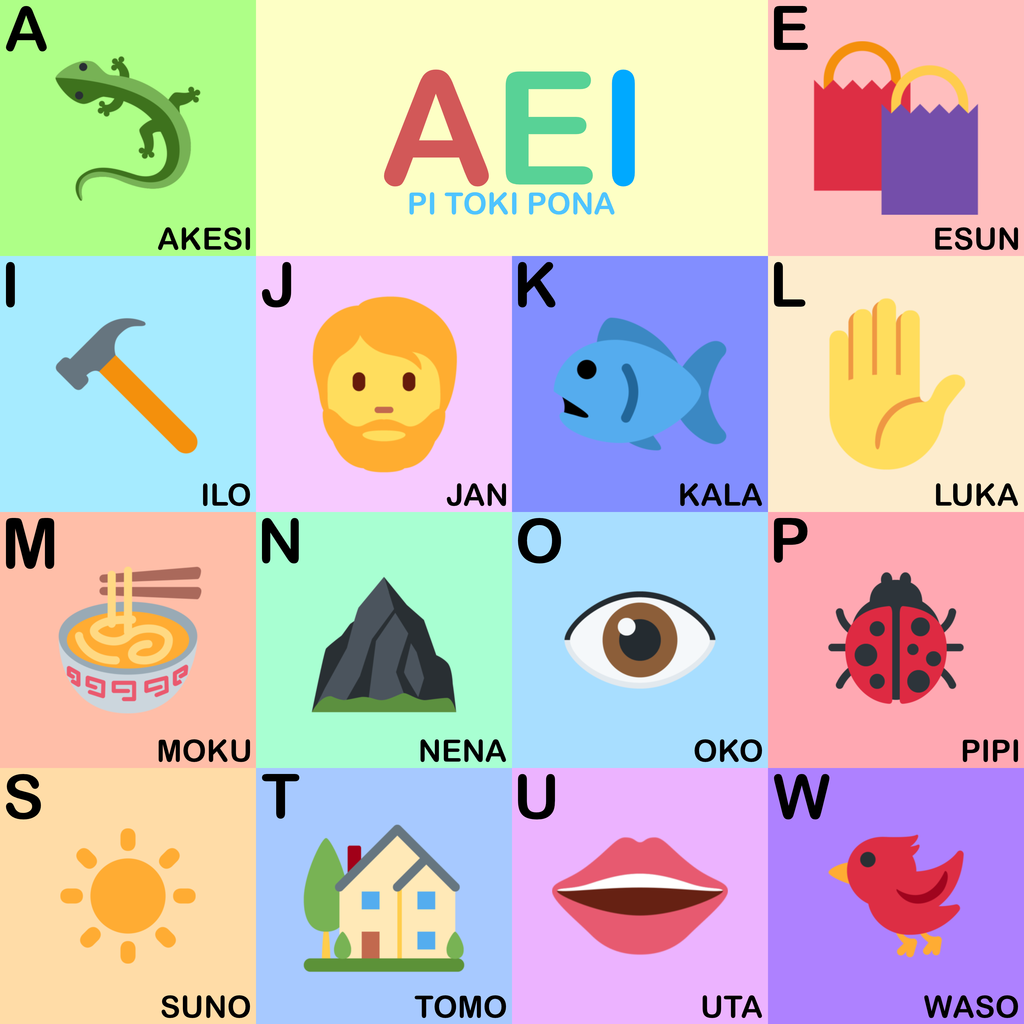
- Toki Pona (Extreme Minimalism): ~120–137 words
- Demonstrates that a tiny lexicon can work for basic communication, but requires heavy compounding and loses precision.
- Not sufficient for complex or technical discussions.
- Basic English (Simplified English): 850 words
- Covers basic communication but relies on English’s existing grammar and idioms.
- Still limited in expressiveness.
- Esperanto (Optimized Auxlang): ~1,000–2,000 roots
- Allows rich expression via affixes and compounding.
- Considered a practical lower bound for a fully expressive language.
- Natural Language Core Vocabularies:
- The Swadesh list (a set of ~100–200 basic concepts) is a starting point, but real languages need more.
- Most languages have 5,000–20,000 common word roots, but a well-designed conlang can be more efficient.
Key Principles for Minimal Root Design
- Semantic Primitives: Use roots that cannot be expressed by others (e.g., «see» vs. «look» might merge).
- Broad Categories: Cover universal human experiences (body parts, actions, nature, emotions, social relations).
- Derivational Morphology: Allow prefixes/suffixes to modify meaning (e.g., «un-«, «-er», «-ness»).
- Compounding: Combine roots to create new meanings (e.g., «sun» + «light» = «sunlight»).
- Polysemy: Let words have multiple related meanings (e.g., «fire» = flame, shoot, dismiss).
Proposed Breakdown of Minimal Roots (1,000–1,500)
| Category | Estimated Roots | Examples |
|---|---|---|
| Basic Objects | 200–300 | sun, water, stone, hand, tree |
| Actions | 300–400 | go, eat, see, give, make |
| Qualities | 200–300 | big, hot, good, fast, red |
| Relations | 100–150 | in, on, with, because, if |
| People/Social | 100–150 | person, mother, friend, speak, rule |
| Nature/Space | 100–150 | sky, earth, star, wind, far |
| Abstract | 50–100 | time, mind, truth, number, part |
Can We Go Below 1,000?
Yes, but with trade-offs:
- ~500 roots: Possible, but requires heavy compounding (like Toki Pona) and loses nuance.
- ~300 roots: Only usable for very basic communication (pidgin-level).
- ~100 roots: Too limited for practical human use (more like a philosophical experiment).
Conclusion
A well-designed artificial human language can function with 1,000–2,000 roots, balancing minimalism and expressiveness. Fewer than ~500 roots sacrifices too much precision, while more than ~2,000 starts to resemble natural languages’ redundancy.
Would you like a sample lexicon or a specific structure for such a language?
are basic grammar asian languages closer to this than european?
Yes, many Asian languages (particularly isolating/analytic languages like Mandarin, Vietnamese, and Thai) are structurally closer to a minimal-root artificial language than most European languages (which tend to be fusional or agglutinative). Here’s why:
Key Features of Asian Languages That Align With Minimalist Conlangs
- Isolating Grammar (No Inflections)
- Words are single morphemes, and meaning is determined by word order and particles (like in a minimalist conlang).
- Example (Mandarin):
- 我吃鱼 (Wǒ chī yú) = «I eat fish» (no verb conjugation, no plural marking).
- Compare to European languages (e.g., Spanish):
- «Yo como peces» (verb conjugates, noun pluralizes).
- Heavy Reliance on Word Order & Context
- No grammatical gender, case markings, or complex tense systems (simpler than Indo-European languages).
- Example (Vietnamese):
- «Tôi đã ăn cá» = «I ate fish» (past marked by a particle đã, not verb change).
- Compounding Over Derivation
- New words are often formed by combining roots (like in a minimalist conlang).
- Example (Mandarin):
- 电脑 (diànnǎo, «electric brain») = «computer».
- European languages often use Latinate/Greek roots instead (e.g., «computer» from Latin computare).
- No Verb Conjugations
- Tense/aspect is marked by particles, not verb changes (closer to how a conlang might handle it efficiently).
- Example (Thai):
- ฉัน กิน (chǎn kin) = «I eat» / ฉัน จะ กิน (chǎn jà kin) = «I will eat» (จะ = future marker).
European Languages: Less Minimalist-Friendly
- Fusional Grammar (Complex Inflections)
- Words change form for tense, case, gender, etc. (e.g., Latin, Russian, German).
- Example (German):
- «der Mann» (nom.) vs. «den Mann» (acc.) – unnecessary for a minimal conlang.
- Redundant Features
- Grammatical gender (Spanish: el sol vs. la luna), agreement systems.
- Example (French):
- «Je suis» (I am) vs. «Nous sommes» (we are) – irregular verb forms.
- Less Efficient Word Formation
- European languages often borrow instead of compounding (e.g., «telephone» vs. Mandarin 电话 diànhuà, «electric speech»).
Exceptions & Caveats
- Japanese/Korean: More agglutinative (like European languages in some ways), but still simpler than Indo-European inflection.
- English: Somewhat isolating (compared to German or Russian), but retains irregular verbs and some fusion.
- Austronesian languages (e.g., Tagalog): Use affixation heavily, making them less minimalist-friendly.
Conclusion
If you’re designing a minimalist artificial language, East/Southeast Asian isolating languages (like Mandarin, Vietnamese, Thai) are better models than European ones because:
✅ No inflections = fewer root variations needed.
✅ Particle-based grammar = simpler rules.
✅ Compounding = fewer root words required.
Would you like a side-by-side comparison of how a minimal conlang might mimic Mandarin’s efficiency vs. European complexity?